The Resilient Little Red-Cockaded Woodpecker
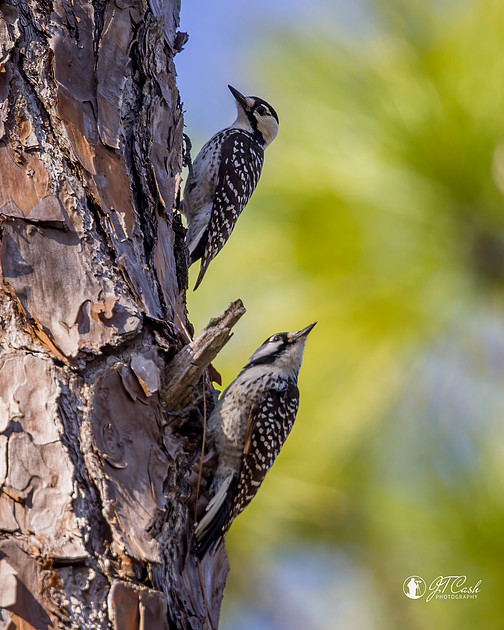
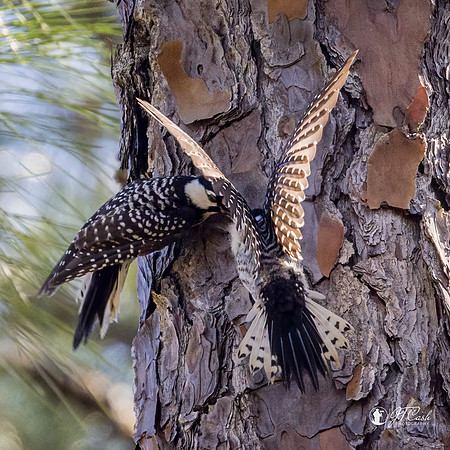
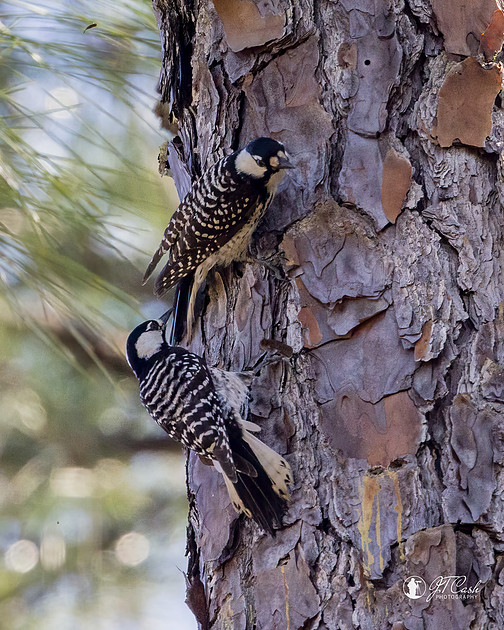
 The story of the red-cockaded woodpecker in the southeastern US is one of the most celebrated and dramatic success stories in modern conservation history. The story of our journey to observe and photograph them in the wild has also finally reached success with an exhilarating experience!
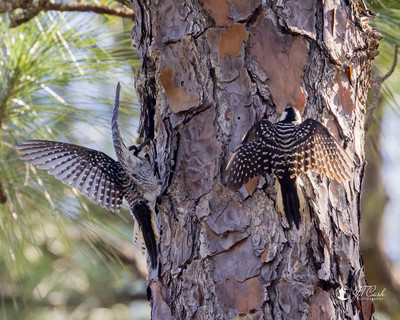
Their story: Once numbering over 1.5 million across a massive southern range, this specialized little bird plummeted to fewer than 1,500 active clusters by the late 1970's due primarily to the near-total destruction of its habitat. Unlike any other North American woodpecker, the red-cockaded woodpecker only excavates its nesting cavities inside LIVING pine trees, showing a very heavy preference for old-growth longleaf pines. Unlike other woodpeckers that prefer dead trees/snags, the RCW's unique, brilliant strategy is that they not only prefer live trees, they choose ones that are typically over 60 to 80 years old and affected by heartwood rot that allows the birds to drill safely. They also peck small sap wells around their cavity entrances, which results in sticky pine resin streaming down the trunk, creating a highly effective sticky barrier that adds protection by deterring predatory snakes.
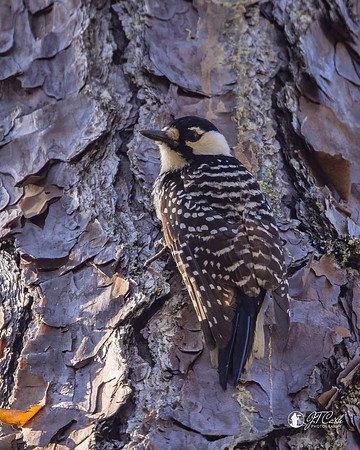
Their extreme specialization became its undoing when European settlement transformed the southern landscape with massive timber harvesting wiping out most of the historic longleaf pine forests and the RCW’s habitat. With an estimated 1,470 clusters remaining, a crisis point was reached by 1970 and they were faced with imminent extinction. Fortunately, the RCW was designated as the very first bird to be placed under the protection of the landmark Endangered Species Act (ESA) when the bill was passed into law in 1973.
Fifty-one years later due to of decades of habitat restoration and the successes of conservation efforts by many, they were officially down listed from Endangered to a Threatened status in October, 2024. Today, the estimates are now around 7,800 clusters ranging across 11 southeast US states, including Georgia. Still a long ways to go and thankfully still under protection to help them continue to rebound!
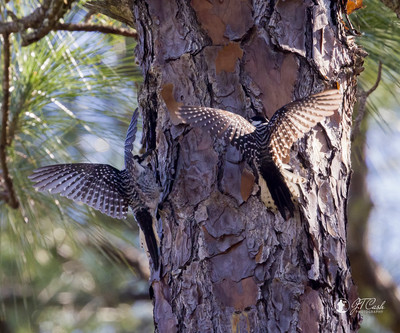
Our long search to see this little woodpecker finally came to a successful end during our last trip to St. Marks and St. Vincent National Wildlife Refuges, which includes areas of longleaf pine forests with a few known family clusters that live and breed there due to their conservation efforts. After several unsuccessful visits, we were finally treated to a 45 minute awesome show of a family clan of four that were chattering and fluttering around from pine to pine foraging for insects under the bark, and exhibiting their distinct wing-display behaviors. The story of the red-cockaded woodpecker is hopefully to be continued with another near-future status upgrade!!!